

Bathroom or Bedroom? How to Store Creams and Serums When the Heating Is On

PRACTICAL SKINCARE THROUGH THE HEATING SEASON
Your moisturiser sits by the basin, your serum is on the dressing table, and the radiators are back on. Which room is the better home for your skincare? The answer depends less on the room’s name than on the exact shelf and the instructions on each pack.
After 40, a comfortable routine often means a few carefully chosen products rather than a crowded cabinet. Storage need not become another complicated ritual. Look for direct sunlight, splashes and nearby heat before searching for a universal temperature that suits every formula.
Bathroom or bedroom: the shelf matters more than the room

A bathroom cupboard can be practical if it stays dry and sits outside the shower’s splash zone. A bedroom chest of drawers may be less suitable if sunshine falls on it or a radiator sits directly underneath. Assess the spot where the products actually stand.
In a small, steamy bathroom, an open shelf beside the basin is not the same as a dry enclosed cupboard. If bottles regularly collect droplets, consider another spot. During the heating season, do not keep moving products between a cold balcony and a warm room: choose a consistent place that meets their own instructions.
Read the label before moving your products

Look for storage directions, an expiry date, a period-after-opening symbol where provided, and any warnings. The open-jar symbol refers to use after opening; it is not interchangeable with a printed expiry date. Not every product carries the same information.
Note the opening date if that helps you keep track. If the label is unclear, retain the outer box and ask the brand, giving the product name and batch details. We do not assign temperatures or shelf lives to Gentle & Rose products here: the product descriptions do not establish those instructions. A pleasant cooling sensation is not a reason to refrigerate every formula.
Small habits that keep packaging clean

Use clean hands, keep lids off wet surfaces and close the packaging when you finish. Leave the product in its original container with the label intact. Do not add water to thin out the remainder or mix a new product into an old one.
Follow the instructions for the pump, dispenser or jar rather than taking the pack apart. A decorative replacement jar can separate the formula from its usage information. If smell, colour or appearance changes unexpectedly, stop using it and ask the manufacturer rather than trying to fix it. An unchanged appearance does not override the stated date.
A cream and a serum: examples, not separate storage rules

Once you have chosen a suitable spot, arrange the products you actually use. Gentle & Rose Prebiotic Moisturising Cream is a moisturising option with prebiotics, rosehip oil and rose oil in the source product description. Consider it for a nourishing feel and everyday comfort, not because changing cupboards calls for a new cream.
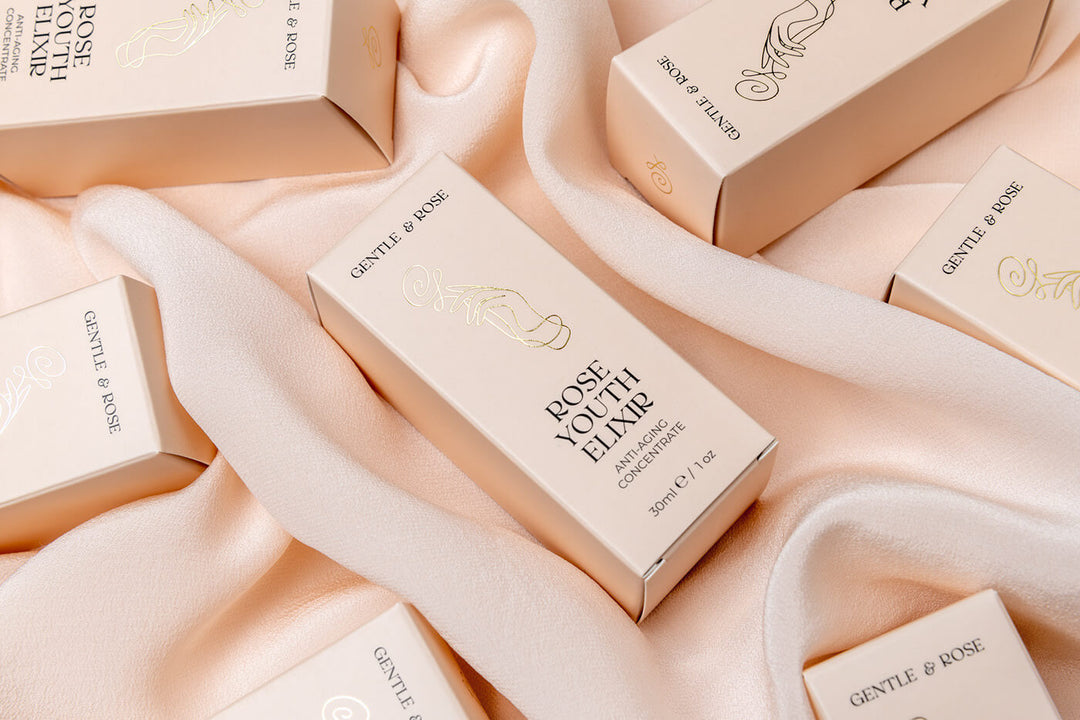
Rose Youth Elixir is a serum with bakuchiol, rose oil and hyaluronic acid, offering cosmetic hydration and a smoother, fresher-looking complexion. Its different place in a routine does not establish different heat resistance or a special period after opening.
These are two examples of checking the original packaging, not a compulsory pair. Choose according to your skin, tolerance and preferences, and follow the individual instructions for each.

A moisturiser for everyday comfort
Explore the ingredients and decide whether this nourishing step suits your routine.
Explore the moisturiser
A serum chosen around your preferences
Discover the bakuchiol formula and its usage directions without adding steps you do not need.
Explore Rose Youth ElixirCreate a convenient place for everyday skincare

A dry shelf where you can pick up a product with clean hands and put it back closed is enough. Keep labels accessible. A small, usable corner is often more helpful than a display that needs constant moving and wiping.
If you apply skincare in the bathroom but store it elsewhere, bring only what you need and put it away afterwards. Reconsider the location when the heating comes on: the shelf may be unchanged, but the radiator beneath it is now warm. Start with three actions: read the label, move the pack away from splashes and direct heat, and close it after every use.
Frequently asked questions
Must I take my cream out of the bathroom?
Not simply because it is a bathroom. Check whether the actual shelf is dry, away from splashes and heat, and consistent with the label.
Can I keep serum on my bedside table?
Check nearby radiators and direct daylight. A bedside table is not automatically suitable if conditions conflict with the product instructions.
Does cold cream keep better?
Do not choose storage by how cooling the cream feels on application. Follow the directions for the specific formula; refrigeration is not the default.
Should I throw away the outer box?
First keep any information found only on the box. Dates, batch details and warnings can be useful when contacting the brand.
Read more
Combination skin in autumn: choosing your moisturiser texture


Leave a comment